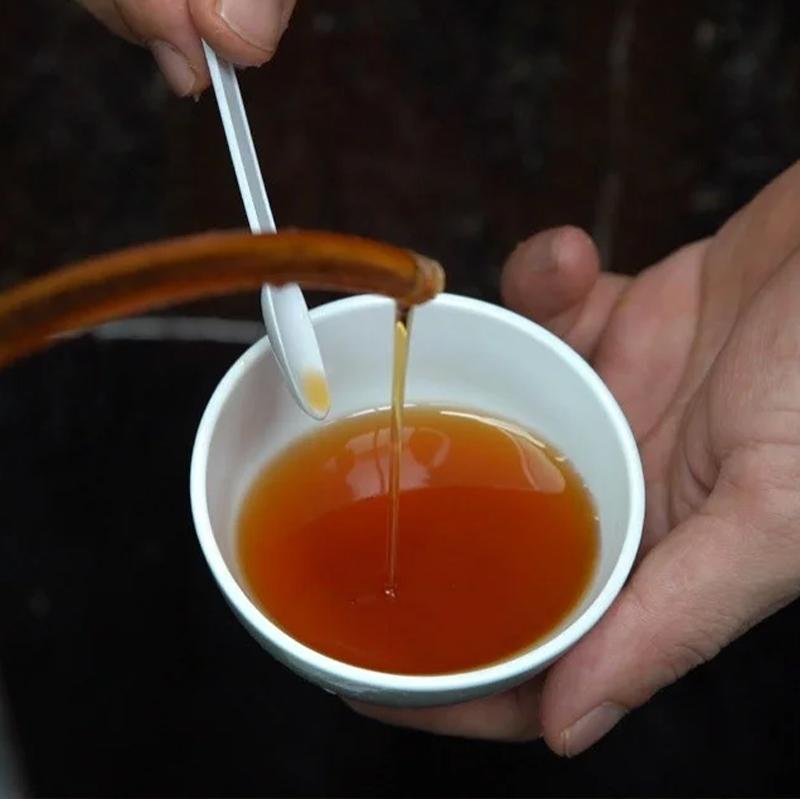

What is the protein content of fish sauce, and how much is good?
Fish sauce is a familiar condiment no Vietnamese kitchen is without. What decides its quality is the protein content. So how much protein is good for your health? And how do you tell one fish sauce from another by that number? Read on.
What is the protein content of fish sauce?
The protein content of fish sauce is the total nitrogen it contains, and it is the figure used to judge quality.
Fish sauce contains three kinds of nitrogen:
- Total nitrogen: this decides the grade of the sauce. It is the total amount of nitrogen present.
- Amino nitrogen: this decides the nutritional value. It is nitrogen bound up as amino acids.
- Ammonia nitrogen: this decides how clean the sauce is. It is the nitrogen of spoilage; too much of it and the sauce is poor.
How much protein is good?
Specialists recommend choosing a fish sauce between 25 and 43 degrees, which is both safe and nourishing. Bottles labelled under 10 degrees cannot be called fish sauce at all, because they fall below the legal minimum.
Is a higher protein content always better?
The truth is that a high number does not mean a better-tasting sauce. Protein content reflects quality, but only for traditional fish sauce. Under normal fermentation it takes about a year to reach roughly 25–30%.
So the figure is worth weighing only when you are buying traditional fish sauce. Many brands on the market today have been developed through careful research and are perfectly safe to choose.
Telling fish sauces apart by protein content
There are two main ways to make fish sauce:
- the traditional method;
- the industrial method.
Traditional fish sauce
This is handmade production: fish are broken down by hydrolysis and left in the sun and open air. Digestive enzymes from the fish gut hold off bacteria and turn the protein of the flesh into nitrogen compounds.
By the traditional method, 40 degrees is usually the ceiling. It can occasionally reach 43–45, but that is very rare.
Industrial fish sauce
Here modern industrial processes are used to make the product in a short time, to meet market demand.
Sauces of 50 or even 60 degrees are usually industrial, produced with technical help — vacuum concentration, for instance — to shorten the process.
These products do have a high protein figure, but they may not be as good for you.
Fish sauce is graded in four classes:
- Special grade: over 30 degrees
- Premium grade: over 25 degrees
- First grade: over 15 degrees
- Second grade: over 10 degrees
Fish sauce is an everyday necessity, and we hope this article makes the number on the label clearer, so you can choose more easily and more safely for your family.